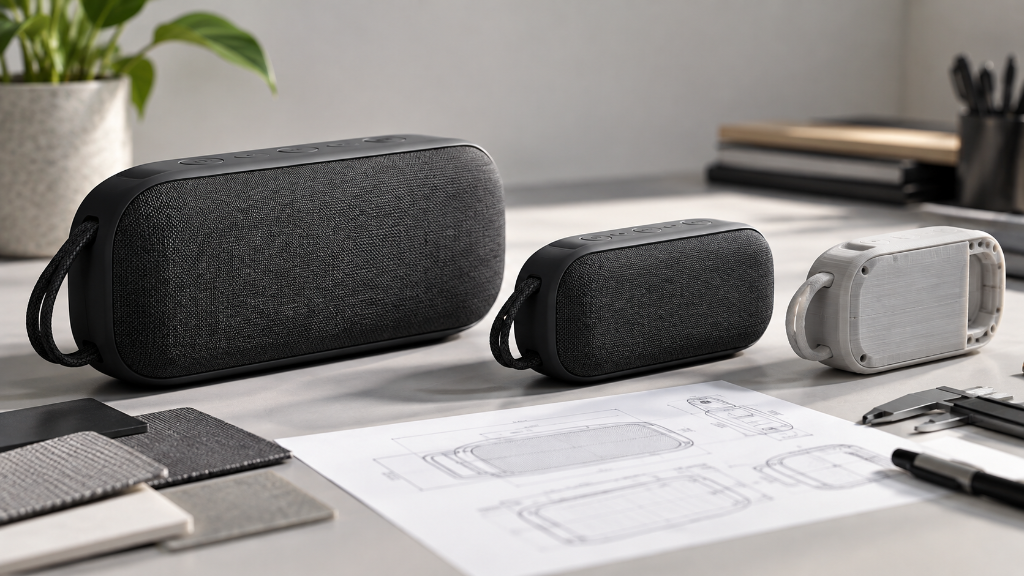
Getting your first product to market is a significant milestone. You've navigated development, established supplier relationships, built a customer base and started generating sales.
Now you're considering what's next.
Expanding your product line can create new revenue opportunities, strengthen customer relationships and help your brand reach new markets. But launching another product brings a new set of decisions, even when you already have an established business.
Before committing to your next product, here are five things worth considering.
1. Identify the Opportunity
Your existing customers are often the best starting point.
What are they asking for? Are there accessories that would complement your current products? Is there an opportunity to improve an existing design or address a related customer need?
Your next product doesn't need to be an entirely new invention. A complementary accessory, product variation or expansion into a related category may offer a more practical opportunity.
The goal is to identify genuine demand rather than expanding your catalogue simply to offer something new.
2. Explore Your Options Beyond Existing Suppliers
Established brands often have manufacturing relationships and development resources they trust. Those relationships are valuable, but they shouldn't automatically determine how your next product is developed.
Manufacturing capabilities, pricing, production capacity and available technologies vary considerably between suppliers. A partner that's well suited to your current product line may not offer the most competitive or efficient approach for your next launch.
Before committing, it's worth exploring what else is available.
Compare manufacturing processes, tooling requirements, production costs, lead times and the level of development support different partners can provide.
The objective isn't necessarily to replace an existing supplier. It's to make sure you're choosing the right partner for the product you're developing.
3. Understand the Development Requirements
Moving from an idea to a finished product typically involves several stages:
- Concept development and industrial design
- Engineering and CAD modelling
- Functional prototyping and testing
- Material selection and design for manufacturing
- Tooling, sourcing and production planning
- Manufacturing and quality control
Each stage influences the next.
A design that works as a prototype may need adjustments before it can be manufactured efficiently. Material selection, assembly methods and production volumes can all affect cost, quality and reliability.
Understanding these requirements early helps avoid expensive revisions later.
It's also worth evaluating whether a potential development partner can support the entire process or whether you'll need to coordinate multiple vendors along the way.
4. Consider the Full Cost of Launching
Development costs are only part of the investment required to introduce a new physical product.
Tooling, materials, testing, packaging, freight and initial inventory can all influence the overall budget.
Production volume matters too. Manufacturing 500 units can have very different economics than producing 5,000.
Before committing, consider your target retail price, expected margins and realistic initial order quantities.
A preliminary bill of materials (BOM) and manufacturing cost review can help identify opportunities to simplify components, adjust materials or improve production efficiency before significant investments are made.
When comparing manufacturing partners, look beyond the quoted unit price. Tooling costs, quality standards, minimum order quantities, lead times and ongoing production support all affect the total cost of bringing a product to market.
5. Consider a Full-Service Development Partner
Expanding your product line doesn't have to mean assigning more work to your existing team or coordinating multiple new suppliers.
A full-service product development partner can manage the process from initial concept and engineering through prototyping, testing, manufacturing and launch preparation.
This approach also creates an opportunity to evaluate different materials, production methods and manufacturing options rather than being limited to the capabilities of an existing supplier.
For established brands, it provides a way to pursue new product opportunities while keeping existing operations focused on the products already in market.
Your team remains involved in key decisions and approvals, while one partner manages the technical development, supplier coordination and production process.
The result is a more coordinated approach to bringing a new product to market, without needing to build additional internal capabilities for every new project.
Bringing Your Next Product to Market
Expanding your product line is an opportunity to build on what you've already established.
Start with a clear market opportunity, understand the development requirements and evaluate your manufacturing options before making major commitments.
Your existing suppliers may be the right choice for your next product, but they're not necessarily your only option.
At BSC Products, we help established brands develop new products and expand existing product lines. From concept development and engineering through prototyping, manufacturing and launch support, our team can manage the process from start to finish.
Whether you're developing a complementary product, entering a new category or simply exploring alternatives to your current manufacturing approach, we can help evaluate your options and bring your next product to market.
Considering your next product? Contact BSC Products to discuss your project.
Ready to discuss your next product?
Let's talk about how your brand's next launch can be planned, manufactured, and brought to market successfully.
Start a Conversation